Future Trends in IoT Device Management Platforms
A new era of interconnected devices and systems has been ushered in by the Internet of Things’ (IoT) rapid proliferation, which has completely changed the technological landscape. Organizations can use this interconnection to generate a wealth of important data for insights and decision-making, in addition to increasing efficiency. But maintaining this enormous IoT device network comes with a lot of work, from fixing security flaws to maximizing efficiency and guaranteeing flawless connectivity.
What are IoT Device Management Platforms?
IoT Device Management Platforms are all-inclusive software programmes made to effectively monitor and manage a network of IoT devices. These systems function as centralized hubs that let businesses easily monitor, set up, update, and protect their networked devices. They are essential for controlling connectivity, facilitating device deployment, protecting data, and maximizing efficiency in a variety of IoT ecosystems.
Basically, IoT Device Management Platforms let administrators track the health of their devices, identify anomalies, and fix problems in real time by offering features like remote device monitoring and diagnostics. Additionally, they enable organizations to release software patches, feature additions, and security fixes to a large number of devices concurrently, minimizing downtime and enhancing overall device reliability. This is accomplished by facilitating over-the-air (OTA) firmware updates.
Microsoft Azure IoT Hub is an example of an IoT Device Management Platform. For managing IoT devices, Azure IoT Hub provides a scalable and secure cloud-based solution with features like data storage, device-to-cloud communication, message routing, and device provisioning. It makes it possible for businesses to safely link millions of devices, gather and examine data from those devices, and plan workflows to effectively automate device management duties. This platform serves as an excellent example of how contemporary IoT Device Management Platforms may improve security, promote operational efficiency, and facilitate seamless integration of IoT devices.
Types of IoT Platforms
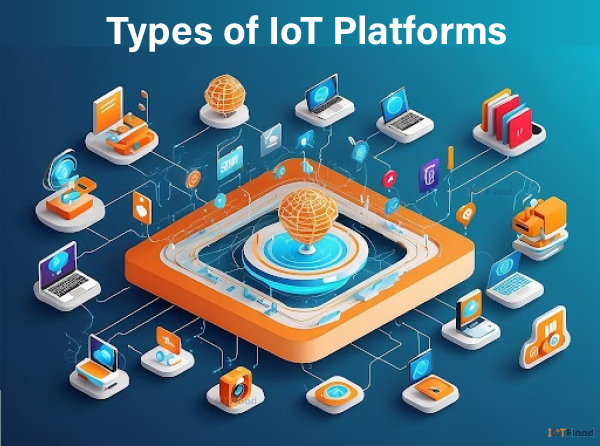
IoT systems come in a variety of forms, each meeting unique requirements and use cases. These are a few typical kinds:
1. Platforms for connectivity
These platforms concentrate on offering the framework needed to link Internet of Things devices to the internet. Features like data ingestion, device management, and communication protocols are frequently included in them.
2. Application Enablement Platforms (AEPs)
By providing tools for data processing, analytics, visualization, and system integration, AEPs assist developers in creating and implementing Internet of Things applications. They frequently come with functions including development environments, APIs, and data storage.
3. Device Management Platforms
These platforms manage IoT devices throughout their lives. They provide functions like device provisioning, security management, firmware updates, and remote monitoring.
4. Cloud Platforms
Scalable infrastructure and services are offered by cloud-based IoT platforms for the management and processing of IoT data. Features like data storage, analytics tools, computing resources, and interaction with other cloud services are frequently included in them.
5. Edge Computing Platforms
By bringing analytics and processing closer to IoT devices, edge platforms lower latency and use less bandwidth. They provide functions like local data storage, cloud or on-premises system integration, and edge analytics.
6. Industrial IoT (IIoT) platforms
IIoT platforms are tailored to certain industrial use cases, including energy, manufacturing, and logistics. They frequently have functions like real-time monitoring, predictive maintenance, support for industrial protocols, and interaction with industrial control systems.
7. IoT Security Platforms
The goal of these platforms is to protect IoT networks, devices, and data. They provide functions like threat detection, encryption, access control, identity management, and security analytics.
Selecting the best kind of IoT platform relies on a number of variables, including the particular use case, scalability needs, compatibility with current systems, security requirements, and financial constraints.
How do they Work?
IoT platforms, which offer a centralized hub for controlling and coordinating connected devices, data, and applications, are essential to the operation of IoT ecosystems. IoT systems operate by utilizing a number of essential parts and procedures.
First of all, IoT platforms enable multiple communication protocols, like HTTP, MQTT, and CoAP, to make devices more connected. They oversee the provisioning, authentication, and onboarding of new devices into the network, guaranteeing their safe and easy integration. The platform and IoT devices can share data thanks to this communication layer.
Second, data ingestion and storage are handled by IoT platforms, which gather, process, and store data produced by linked devices. Sensor readings, telemetry data, operational metrics, and user interactions are a few examples of this data. To effectively handle massive amounts of IoT data, platforms frequently make use of cloud storage options, scalable databases, and data lakes.
Thirdly, data processing, analytics, and visualization tools and services are offered by IoT platforms. Through the use of statistical models, machine learning algorithms, and data visualization approaches, they make real-time monitoring, historical analysis, and forecast insights possible. These features enable customers to maximize operations, take well-informed decisions, and extract useful insights from IoT data.
IoT platforms also include capabilities for security, device management, and system integration. They make it possible to set security policies, monitor compliance, update firmware remotely, control access, and manage devices. The ability to integrate seamlessly with third-party apps, enterprise systems, and other IoT platforms promotes ecosystem growth and interoperability.
IoT platforms, which offer a unified architecture for securely, scalable, and effectively managing devices, data, applications, and services, are essentially the backbone of IoT deployments.
Why do we need them?
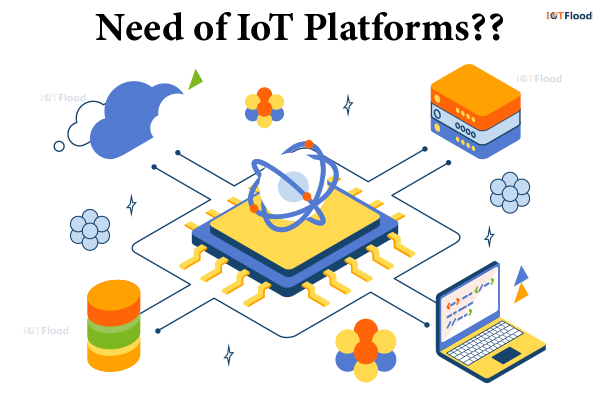
IoT platforms are essential for the following main reasons, which are essential for the effective deployment and administration of IoT solutions:
Device Management:
A wide variety of IoT devices can be centrally controlled and managed with the help of IoT platforms. This covers operations including setting up, provisioning, monitoring, updating firmware, and troubleshooting devices. Managing a big number of linked devices gets difficult and ineffective without a platform.
Data Handling and Processing:
IoT platforms provide strong data handling capabilities, such as data intake, storage, processing, and analysis. They are able to process enormous amounts of data produced by Internet of Things (IoT) devices and use analytics algorithms to quickly extract insightful information. This competence is essential for streamlining procedures, increasing operational effectiveness, and making data-driven decisions.
Integration and Interoperability:
IoT platforms make it easier for many systems, protocols, and devices to work together. They serve as go-betweens, bridging the gap between various hardware and software components to allow for smooth data transmission and communication. In order to integrate IoT solutions with the current IT infrastructure and build full IoT ecosystems, interoperability is crucial.
Security and Compliance:
To safeguard IoT networks, data, and devices from online attacks, IoT platforms are equipped with strong security measures. To guarantee the confidentiality, integrity, and availability of data, they put authentication, access control, encryption, and other security procedures into practice. They also assist companies in adhering to industry norms and legal obligations for data security and privacy.
Scalability and Flexibility:
IoT platforms are designed to easily scale as the number of connected devices and data volumes increase. To meet a range of business requirements, they provide flexible deployment alternatives, such as cloud-based, on-premises, and hybrid models. Because of its scalability and flexibility, businesses can easily grow their IoT deployments and change to meet changing needs.
Application Development and Deployment:
IoT platforms facilitate the development and deployment of IoT applications by offering frameworks, developer tools, and APIs. For popular IoT use cases, they provide pre-built modules, templates, and libraries, which shorten development time and speed up time to market. This gives companies the freedom to develop and provide clients with value-added services more effectively.
IoT platforms, in general, are essential to achieving the full potential of IoT technology because they handle important issues with data handling, device management, interoperability, security, scalability, and application development. They act as the cornerstones that allow businesses to fully utilize the revolutionary potential of the Internet of Things for better decision-making, digital transformation, and improved consumer experiences.
Architecture of IoT Device Management Platforms
The management, processing, and utilization of IoT devices and data are made possible by the cooperative efforts of multiple layers and components that make up the architecture of most IoT platforms. The common architecture elements of IoT systems are broken down as follows:
Device Layer:
This layer includes wearables, actuators, sensors, and other Internet of Things devices. These gadgets gather information about temperature, humidity, location, and motion from the physical world and send it to the Internet of Things platform for analysis.
Connectivity Layer:
This layer manages the connection between the platform and IoT devices. It provides support for multiple communication protocols, including HTTP, WebSocket, CoAP, MQTT, and HTTP to guarantee dependable and secure data transfer. Additionally, this layer controls provisioning, authentication, and device connectivity.
Data Ingestion and Storage:
IoT systems in this layer take in data from devices that are linked and store it in a scalable and robust way. This can entail storing both raw and processed IoT data in databases, data lakes, or cloud storage services. Data is acquired securely and efficiently thanks to data intake techniques.
Data Processing and Analytics:
In order to obtain useful insights, IoT data must be processed and analyzed by the data processing and analytics layer. It has features like batch processing, machine learning methods, statistical analysis, and real-time stream processing. Real-time monitoring, predictive maintenance, anomaly detection, and IoT operation optimization are made possible by these capabilities.
Application Enablement:
This layer offers services, tools, and APIs for creating, implementing, and maintaining Internet of Things applications. It has capabilities including data access APIs, application development frameworks, visualization tools, and system integration. Developers are given the ability to design unique IoT apps that are suited to particular use cases by application enablement platforms (AEPs).
Device Management:
IoT device lifecycle management is handled by the device management layer. Device provisioning, configuration management, firmware updates, remote monitoring, and troubleshooting are among its features. IoT devices run smoothly, securely, and with the most recent software updates thanks to device management systems.
Identity management and security:
An essential component of IoT platforms is security. Features for data privacy, encryption, access control, authentication, and threat detection are included in this layer. It guarantees that communications, data, and IoT devices are shielded from illegal access, cyberattacks, and data breaches.
Interoperability and Integration:
IoT platforms enable interoperability and integration with third-party services, enterprise apps, cloud services, and external systems. Interoperability between various protocols and standards, smooth data interchange, and integration with current IT infrastructure are all made possible by this layer. It guarantees that IoT solutions may cooperate and coexist in larger ecosystems.
User Interface and Experience:
To help people monitor, analyze, and engage with IoT data, the user interface layer offers dashboards, visualization tools, reports, and alarms. Its main goals are to provide administrators, operators, and stakeholders with a user-friendly interface, actionable insights, and decision support.
IoT platform architecture as a whole aims to provide a flexible, safe, and scalable ecosystem that leverages the power of connected devices and data to propel digital transformation, innovation, and economic value.
Benefits of IoT Device Platforms
Platforms for IoT devices provide a number of advantages that are essential for businesses wishing to take use of connected devices and IoT technologies. The following are some main advantages of IoT device platforms:
Centralised Device Management:
Internet of Things platforms offer a single point of contact for controlling and keeping an eye on a wide variety of IoT devices. This covers operations including firmware updates, configuration management, device provisioning, remote diagnostics, and real-time monitoring. Centralized management guarantees that devices are operating at peak performance, decreases manual labor, and increases operational efficiency.
Scalability:
As the number of connected devices increases, IoT device platforms are made to grow with ease. Their ability to manage numerous devices at once, potentially reaching millions, qualifies them for extensive Internet of Things implementations. Scalability guarantees that enterprises may grow their IoT networks without sacrificing dependability or performance.
Data Collection and Analysis:
These platforms include instruments for data analysis, reporting, and visualization in addition to facilitating the collection of data from IoT devices. They enable businesses to obtain insightful knowledge about operations, performance, and consumer behavior by managing massive amounts of data produced by sensors, actuators, and other devices. Real-time decision-making, predictive maintenance, and process optimization are supported by data analytics capabilities.
Security and Compliance:
To safeguard devices, data, and networks from cyber attacks, IoT device platforms are equipped with strong security measures. To guarantee the confidentiality, integrity, and availability of data, they put access control, authentication, encryption, and security measures into practice. Compliance capabilities assist organizations in meeting industry standards and legal obligations around data security and privacy.
Integration with Other Systems:
Cloud services, third-party apps, and other enterprise systems can all be seamlessly integrated with IoT device platforms. They facilitate the compatibility of various protocols and standards, which makes it possible for Internet of Things solutions to interact with current IT infrastructure and business procedures. The ability to integrate streamlines departmental cooperation, workflow automation, and data exchange.
Remote Monitoring and Control:
These systems allow for remote monitoring and control of IoT devices, regardless of their location. In sectors where real-time insights and solutions are crucial, like manufacturing, healthcare, energy, and transportation, this capability is valuable. Improved asset utilization, decreased downtime, and increased operational efficiency are all benefits of remote monitoring.
Predictive Maintenance:
IoT device platforms enable predictive maintenance by analyzing data from sensors and devices to predict equipment breakdowns before they occur. By taking a proactive stance, companies can increase overall reliability, decrease maintenance costs, increase asset lifespan, and minimize accidental downtime.
Improved Customer Experience:
Businesses may provide better customer experiences by using IoT device platforms to offer proactive assistance, predictive analytics, and personalized offerings. IoT-enabled goods and services can increase consumer satisfaction, foster loyalty, and open up new revenue opportunities.
In conclusion, centralized device management, scalability, data analytics, security, integration, remote monitoring, predictive maintenance, and enhanced customer experiences are just a few advantages that IoT device platforms have to offer. These advantages enable businesses to fully utilize IoT technology and promote efficiency, creativity, and competitiveness across a range of sectors.
The Evolving Landscape: Future Trends in IoT Device Management Platforms
A number of significant changes that are reshaping the data management and connected device environment will define the future of IoT device management systems. The incorporation of machine learning (ML) and artificial intelligence (AI) functionalities into device management platforms is one popular trend. By enabling automated decision-making, predictive maintenance, anomaly detection, and advanced analytics, these technologies improve the effectiveness and dependability of Internet of Things operations.
Organizations may increase overall system resilience, foresee problems before they arise, and maximize device performance with the use of AI-driven insights.
The use of edge computing in IoT device management platforms is another noteworthy trend. By bringing processing power closer to Internet of Things (IoT) devices, edge computing lowers latency, bandwidth consumption, and reliance on centralized cloud infrastructure. The demand for low-latency apps, real-time data processing, and improved security and privacy for Internet of Things installations is what is driving this development. Device management platforms with edge capabilities provide quicker reaction times, more autonomous edge devices, and localized data processing, which makes them ideal for time-sensitive and mission-critical applications. What does the future hold for these platforms?
Let’s examine some major themes influencing how IoT device management is developing.
Edge Computing Integration:
IoT device management platforms are rapidly incorporating edge computing capabilities to process data closer to the source, lowering latency and boosting real-time decision-making in key applications.
AI and Machine Learning:
By utilizing data insights for proactive management and efficiency, the integration of AI and machine learning algorithms into device management systems allows predictive maintenance, anomaly detection, and performance optimisation.
Security Enhancements:
Security is still of utmost importance due to the widespread use of linked devices. In order to successfully detect and mitigate cybersecurity risks, modern IoT device management platforms prioritize robust encryption, secure boot methods, and constant monitoring.
Interoperability Standards:
By promoting interoperability between devices made by different manufacturers, industry-specific standards and standardization initiatives in IoT protocols enable smooth integration and management across a variety of IoT ecosystems.
Scalability and Flexibility:
Key trends include scalable architectures and flexible deployment choices (cloud, edge, hybrid), which enable platforms to optimize resource utilization and adaptability while accommodating a growing number of devices and different use cases.
Lifecycle Management:
Provisioning, configuring, monitoring, updating, and retiring devices are all included in the comprehensive capabilities of device lifecycle management. This guarantees that devices are safely managed for maximum security and performance at all times.
Data analytics and Insights:
Integrated with device management platforms, advanced analytics solutions offer useful information about usage trends, device performance, and environmental factors. This information helps businesses make decisions and streamline processes.
Edge-to-Cloud Orchestration:
Data flow, workload allocation, and resource utilization are optimized through seamless orchestration between edge devices and cloud services. This balances processing activities between local and centralized settings for maximum efficiency and economy.
Automation and Self-Healing:
Automation elements that minimize manual intervention, improve operational efficiency, and guarantee ongoing device availability and reliability include rule-based operations, policy enforcement, and self-healing mechanisms.
Regulatory Compliance and Governance:
Ensuring data privacy and security while minimizing legal and reputational risks associated with IoT deployments is made possible by organizations with strong compliance management skills that help them comply with industry standards and regulatory obligations.
User Experience and Human-Centric Design:
A major distinction for IoT device management platforms will be user experience (UX). Upcoming platforms will put a high priority on human-centric design concepts and provide actionable insights, personalized dashboards, and user-friendly interfaces. This emphasis on UX improves usability, lowers learning curves, and gives users the tools they need to efficiently manage and optimize their Internet of Things environments.
Digital Twins and Simulation:
IoT platforms will increasingly rely on digital twins, which are virtual copies of real assets or operations. Businesses may optimize operations, simulate what-if scenarios, and make data-driven decisions by using digital twins, which facilitate predictive modeling, simulation, and scenario analysis. Along with improving agility and creativity, this technology also makes remote monitoring, predictive maintenance, and quick prototyping possible.
Zero-Trust Security Models:
In IoT device management platforms, zero-trust security models will become more popular, especially for enterprise deployments. These approaches follow the maxim “never trust, always verify” and incorporate the least privilege, continuous authentication, and stringent access controls. Zero-trust architectures reduce attack surfaces and neutralize insider threats, improving security posture.
The requirement for greater functionality, improved security, scalability, and seamless integration with emerging technologies has fueled the continuous evolution of IoT device management platforms, as these trends demonstrate.
Real-World Instances of Organisations Pursuing It
Numerous businesses are actively developing IoT device management platform trends for the future. Here are some instances from the actual world:
Microsoft Azure IoT:
Combining cutting-edge technologies like edge computing, artificial intelligence, and strong security measures, Microsoft’s Azure IoT platform is notable for its comprehensive approach to device management. Azure IoT facilitates the smooth integration of edge-to-cloud orchestration, allowing enterprises to maximize data processing, improve decision-making through sophisticated analytics, and maintain regulatory compliance. In addition to offering a safe and dependable infrastructure for deploying and managing IoT devices at scale, its scalability and flexibility enable enterprises to effectively manage a variety of IoT ecosystems.
AWS IoT:
To effectively manage IoT devices at scale, the AWS IoT platform provides a full range of services. AWS IoT guarantees real-time data processing, predictive maintenance, and threat detection with an emphasis on edge computing, machine learning, and strict security measures. With a focus on data analytics and interoperability, it facilitates smooth integration and offers useful insights for defensible decision-making. For businesses navigating the challenges of IoT installations, Amazon IoT offers a holistic solution thanks to automated device lifecycle management, which further improves operational efficiency.
Google Cloud IoT:
This state-of-the-art platform uses AI and machine learning to transform device management. It is part of Google Cloud. It gives businesses the ability to optimize operations and make data-driven decisions by providing predictive maintenance, anomaly detection, and advanced data analytics. With scalable architectures, strong security features, and edge computing capabilities, Google Cloud IoT offers a complete and safe environment for controlling IoT devices and deriving insightful information from IoT data.
IBM Watson IoT:
Using edge computing, blockchain technology, and AI-powered analytics, IBM’s Watson IoT platform is at the forefront of innovation, offering scalable and secure device management solutions. With a focus on real-time insights, predictive maintenance, and regulatory compliance, IBM helps businesses to optimize operations, proactively identify problems, and guarantee data security and integrity. Watson IoT integrates state-of-the-art technology to enable enterprises to fully use IoT devices while upholding strict security and legal requirements.
Siemens MindSphere:
Designed specifically for industrial use, Siemens’ MindSphere platform is a top cloud-based Internet of Things solution. MindSphere provides real-time data processing at the edge, lowering latency and increasing operational efficiency thanks to its strong edge computing capabilities. Predictive maintenance capabilities aid in spotting and resolving problems before they worsen, and the platform’s emphasis on data analytics gives businesses insightful information about how they operate. In order to facilitate precise simulations and improve overall device management and performance, MindSphere also makes use of digital twin technology to generate virtual clones of physical assets.
Cisco IoT:
The comprehensive approach to managing IoT devices in various situations makes Cisco’s IoT platform unique. The platform facilitates real-time data processing at the edge, improving responsiveness and lowering latency, with a heavy focus on edge computing infrastructure. Cisco’s cybersecurity solutions effectively address potential vulnerabilities and mitigate cyber threats to provide strong protection for Internet of Things deployments. The data analytics tools on the platform enable organizations to make well-informed decisions and optimize their operations by offering practical insights. Cisco is a dependable option for companies looking for cutting-edge IoT management solutions because of its emphasis on scalability, automation, and secure connectivity, which further improves the effectiveness and dependability of IoT deployments.
Bosch IoT Suite:
From edge computing to AI-driven analytics and security, Bosch’s IoT Suite offers a full-featured solution for managing devices. Because of the platform’s focus on interoperability, a variety of devices and systems can be seamlessly integrated, facilitating effective data interchange and teamwork. Bosch optimizes device performance and lifetime by streamlining provisioning, configuration, and maintenance processes through lifecycle management. The suite also places a high priority on regulatory compliance, abiding by rules and industry norms to protect the security and privacy of user data. Bosch’s IoT Suite provides a solid basis for interoperability, lifecycle management, and regulatory compliance, among other important aspects, making it an end-to-end solution for IoT applications.
These businesses demonstrate how upcoming developments in IoT device management platforms are being applied in practical settings, tackling issues with automation, security, scalability, and analytics in IoT deployments across many industries.
The Future is a Symphony of Connections
An era of transformation when intelligence is ingrained in every part of our networked environment is being ushered in by the confluence of AI, edge computing, and improved connectivity in IoT platforms. In addition to automating repetitive operations, AI-driven algorithms will enable IoT devices to learn and adapt instantly, making wise judgements based on data insights. Edge computing, which distributes processing capacity closer to the data source to enable faster response times and lessen need on centralized infrastructure, is another example of how this intelligence is extended.
Furthermore, the focus on interoperability and security guarantees that these clever IoT systems run inside a reliable and strong framework. Cyber attacks are warded off with the help of security mechanisms like end-to-end encryption, AI-driven threat detection, and blockchain-based authentication, which also protect sensitive data and maintain user privacy. Conversely, interoperability facilitates smooth communication and integration between various systems and devices, opening the door for cooperative ecosystems that boost productivity and creativity in a variety of sectors.
The orchestration of edge computing, security, AI, and interoperability results in a harmonic blend of intelligence, resilience, and scalability in this symphony of links. We may see a time when IoT platforms orchestrate an interconnected digital fabric that improves our lives, businesses, and communities in significant ways, in addition to connecting devices, as these trends continue to develop.
Conclusion
IoT device management systems will take on a new role in the future that goes beyond simple device management to include orchestrating an intelligent and seamless ecosystem that maximizes all connected processes. Proactive problem-solving, improved processes, and predictive maintenance will all be made possible by advanced automation driven by AI and machine learning. This degree of automation raises productivity and efficiency levels overall while lowering the need for manual intervention.
As IoT implementations grow, strong security protocols will remain critical. Platforms will use a zero-trust strategy to protect sensitive data and reduce cybersecurity risks, from secure device onboarding to ongoing monitoring and threat detection. Interoperability and scalability will continue to be key components, guaranteeing that systems can easily interact with current infrastructures and adjust to changing requirements. Furthermore, a strong focus on sustainability and user experience will spur innovation, resulting in user-friendly interfaces, efficient energy use, and the promotion of eco-friendly behaviors across the IoT ecosystem.
IoT device management systems will essentially focus on developing intelligent, safe, and sustainable environments. Here gadgets collaborate to produce value, spur innovation, and improve our quality of life and work in the digital age. Accepting these trends will open the door to a future that is more resilient, effective, and connected while also enabling linked devices to reach their full potential.